

The Meaning Behind Each Item in a Hindu Puja Tray
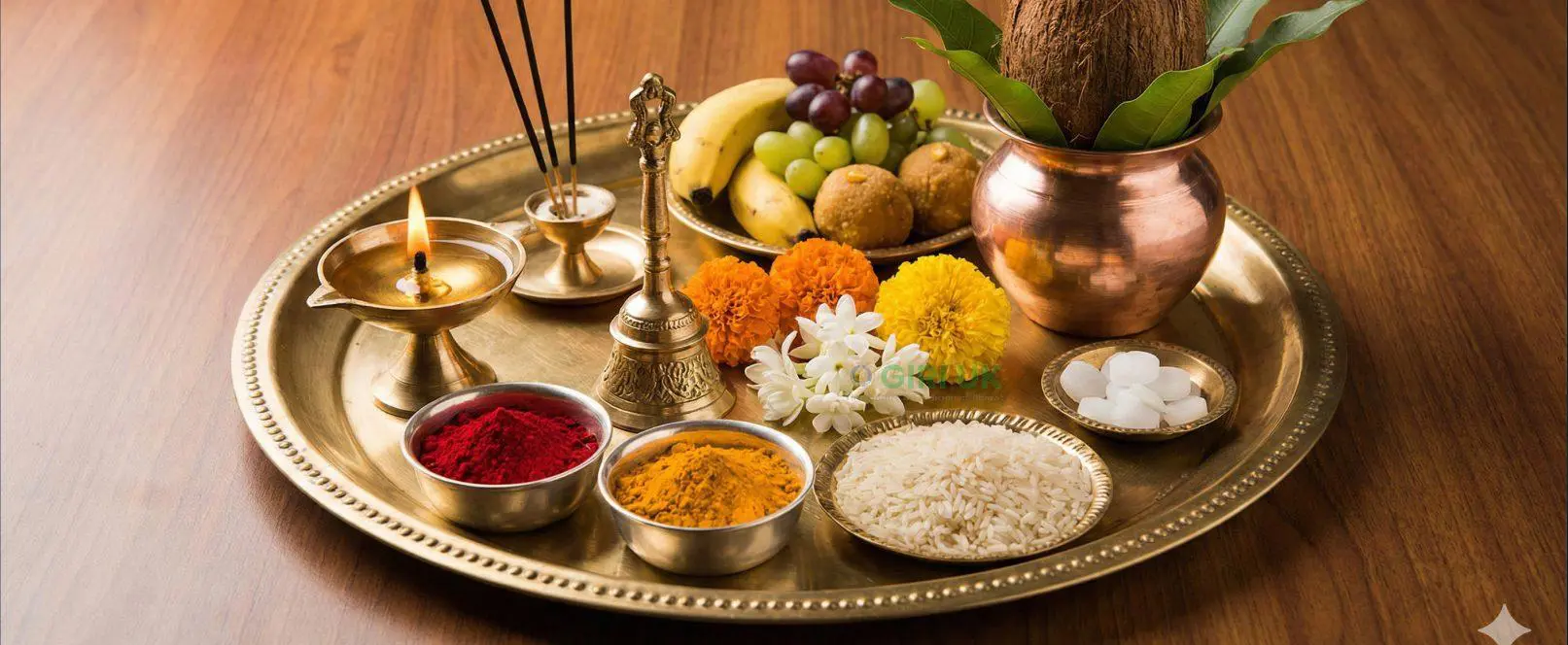
A Hindu puja tray, or pooja thali, is much more than a collection of ritual objects; it is a sacred ensemble where each item carries deep symbolism and spiritual purpose. Used during daily worship and special ceremonies, the puja tray serves as the devotee’s medium of offering pure love, respect, and devotion to the divine.
Understanding the meaning behind each item enriches the worship experience and strengthens the connection between devotee and deity. Here is a detailed look at the most common puja tray components and their significance.
Diya (Lamp)
The diya, often made of brass or clay, symbolises divine light that dispels darkness and ignorance. Lighting the diya is the first step in worship, signifying knowledge, purity, and spiritual illumination. The steady flame offers warmth and hope, reminding devotees to keep their inner light burning even amidst life’s challenges.
Incense Sticks (Agarbatti)
Burning incense purifies the atmosphere by releasing fragrant smoke, which represents the transformation of the physical into spiritual essence. The rising smoke carries prayers and intentions upwards to the heavens, symbolically connecting the world of the devotee with the divine realm.
Kumkum (Red Powder) and Haldi (Turmeric)
Kumkum represents life force and spiritual energy and is often applied as a tilak on the forehead to awaken the third eye and inner vision. Haldi, known for its purifying and healing properties, symbolises fertility, prosperity, and protection. Together, they balance passion and grounding energy in the ritual space.
Pooja Kalash (Metal Pot)
The kalash, a metal pot usually filled with water and topped with mango leaves and coconuts, symbolises the universe and the source of life itself. The water inside signifies primordial waters from which creation emerged, while the mango leaves and coconut stand for fertility and sustenance, encompassing the cosmic cycle of creation and renewal.
Rice (Akshata)
Rice grains, used both as offerings and during aarti, symbolise abundance, prosperity, and purity. Regarded as a sacred grain, rice sustains life, making it a fitting gift to the divine for blessings of nourishment and growth.
Conch Shell (Shankh)
Blown at the start and during auspicious moments, the shankh’s resonant sound represents the sacred syllable “Om”, the primordial vibration of the universe. It signifies purity, auspiciousness, and the awakening of spiritual energy.
Bell (Ghanta)
Ringing the bell at the beginning of puja invites divine presence, dispels negative energies, and sharpens the devotee’s focus. The resonating sound is believed to awaken the inner self and mark the transition from the mundane to the sacred.
Flowers
Fresh flowers symbolise beauty, purity, and devotion. Their fragrant offerings please the divine and add freshness and joy to the worship space, reminding practitioners of the transient beauty of life.
Water
Clean water on the tray is used for ritual purification, both of the worshipper’s hands and of sacred objects. Water represents life, renewal, and the cleansing of impurities, preparing the devotee to receive divine blessings.
Camphor (Kapoor)
Burnt towards the end of ceremonies, camphor’s flame signifies the destruction of the ego and the illuminating power of knowledge that burns away darkness and impurities, leaving behind spiritual clarity.
Prasad (Food Offerings)
Offerings of food such as fruits and sweets are presented to the deity as gratitude for blessings received. After prayers, this blessed prasad is shared among devotees, symbolising the divine’s generosity and the sharing of spiritual nourishment.
Each item on the puja tray, through its unique symbolism, integrates the five senses and spiritual elements to create a sacred ceremony of devotion and connection. Using these items consciously enhances the depth and beauty of every Hindu worship ritual.
With products available from Giri UK’s puja section—including diya lamps, kumkum containers, incense, and brass kalash—devotees in the UK can easily assemble a puja tray rich with meaning and tradition, creating a sacred home altar filled with spiritual significance.
Comments