

Glass Bangles: The Symbolism and Charm in Indian Culture
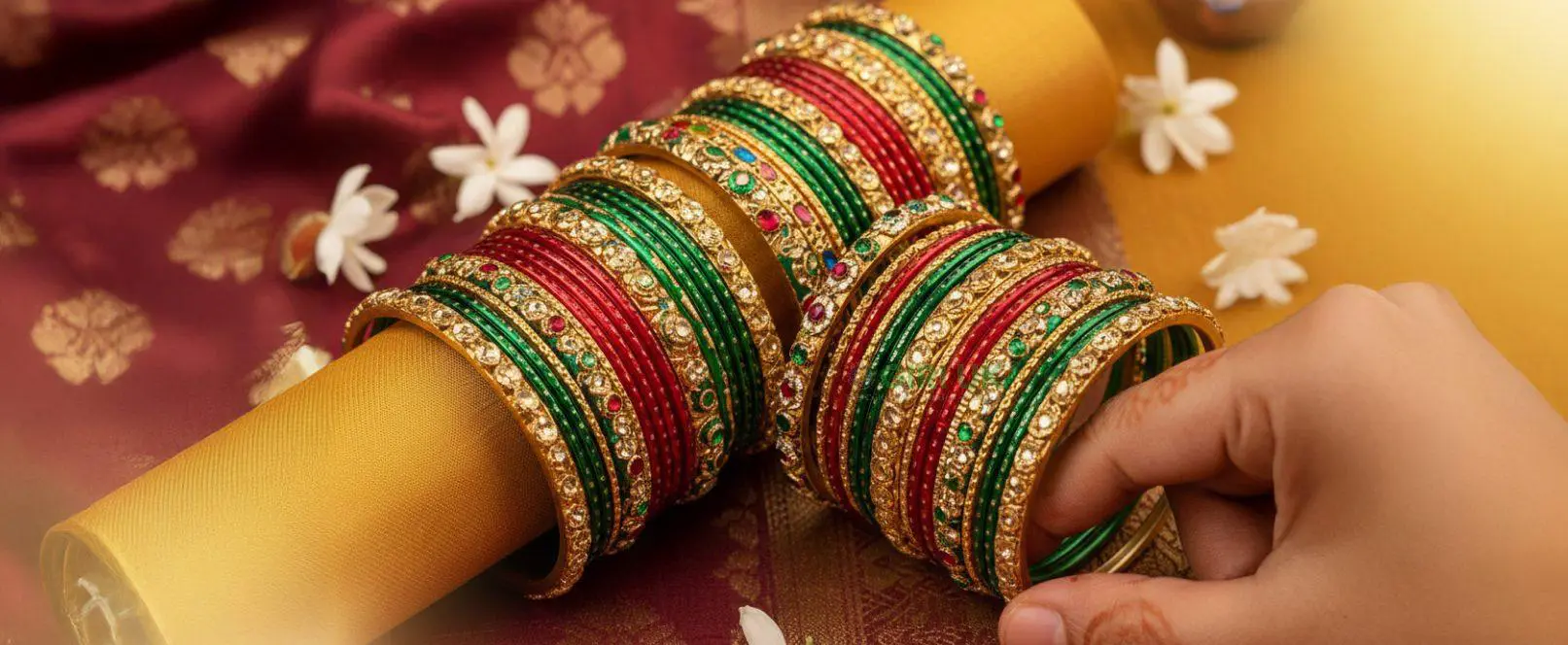
Glass bangles, known as “kangan” or “choodi” in various Indian languages, are more than delicate adornments—they are vibrant symbols of joy, marital bliss, prosperity, and cultural identity deeply woven into the fabric of Indian traditions. Dating back to the Indus Valley Civilization around 2600 BC, these colorful glass ornaments have evolved from simple accessories to profound emblems of femininity, spirituality, and life’s cyclical beauty. Their tinkling sound evokes celebration, while their fragility mirrors the tender aspects of life, making them cherished across generations, especially in diaspora communities like those in the UK.
Historical and Cultural Roots
Archaeological evidence from sites like Taxila reveals ornate bangles from the Mauryan era, but glass-making techniques flourished during the Mughal period (16th century), with Firozabad in Uttar Pradesh emerging as a global hub. Crafted by skilled artisans using blowpipe methods, glass bangles became affordable yet exquisite, democratizing beauty. In Hindu culture, their circular shape represents eternity, unity, and the endless cycle of life—much like the soul’s journey. The sound of clinking bangles is believed to ward off evil spirits, attract positive energy, and regulate bodily vibrations for well-being.
For married women, glass bangles signify suhaag (marital status), invoking good fortune for husbands and families. A bare wrist is considered inauspicious, emphasizing their protective and auspicious role.
Symbolism Through Colors and Regions
Colors imbue glass bangles with layered meanings:
- Red: Passion, fertility, and marital harmony; essential for newlyweds.
- Green: New beginnings, prosperity, and growth; popular in Maharashtra alongside gold patlya.
- White/Transparent: Purity and peace, often for widows or spiritual observances.
- Yellow/Gold: Wealth and auspiciousness, favored during Diwali.
Regional variations add richness. In Bengal, shakha (white conch shell) and pola (red coral) bangles symbolize enduring bonds. Rajasthani women stack vibrant multicolored sets for folk dances, while Punjabi Baisakhi celebrations feature chooda sets. During Karva Chauth, North Indian women wear red-green pairs while fasting for spousal longevity. Navratri garba dancers dazzle with rotating stacks matching nine-colored outfits honoring Goddess Durga.
Festivals amplify their charm—Diwali brides don red-gold sets for prosperity, Teej features green for monsoon rejuvenation, and weddings see ritual bangle ceremonies blessing fertility.
Modern Relevance and Preservation
Today, glass bangles blend tradition with trends. Lightweight, hypoallergenic versions suit daily wear, while fusion stacks pair with Western outfits for UK professionals. Bollywood and influencers revive interest, but sustainability drives eco-friendly recycled glass options. In the UK, Tamil and broader Indian communities wear them for Pongal, Diwali, and Bharatanatyam performances, preserving heritage amid multiculturalism.
Giri UK’s Dancewear & Jewellery collection offers authentic glass bangle sets in festive colors, perfect for rituals or dance, with easy UK delivery to keep traditions alive.
Challenges and Care
Fragility demands care—avoid water exposure to prevent cracking, store separately, and replace broken ones ritually to avert misfortune. Modern resin alternatives mimic glass durability without cultural dilution.
Conclusion
Glass bangles encapsulate Indian culture’s joy, resilience, and spirituality—their chime heralds happiness, colors paint life’s palette, and circle embodies eternity. From ancient crafts to global wardrobes, they charm across eras. For UK celebrants, they bridge homes and heritage. Discover vibrant glass bangle sets at Giri UK—ideal for weddings, festivals, or daily grace. Embrace the tinkling tradition and let their symbolism adorn your story.
Comments