

The Story Behind Ethnic Jewellery: From Temple Designs to Modern Trends
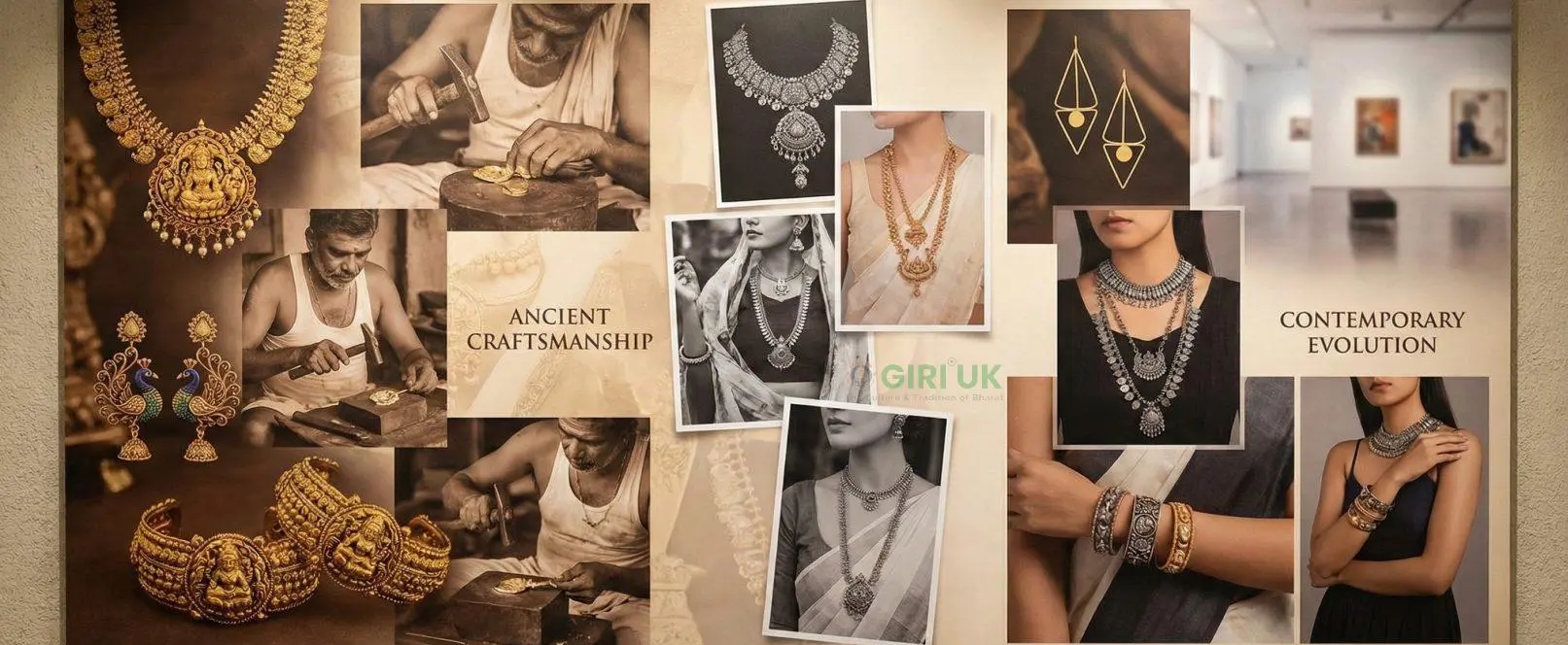
Ethnic jewellery in India represents a profound fusion of spirituality, artistry, and cultural identity, with temple jewellery standing as its most iconic form. Originating from South India’s ancient temples, these ornate pieces were initially crafted as divine adornments for deities, embodying sacred motifs and intricate craftsmanship. Today, they have evolved into cherished heirlooms and fashion statements, bridging tradition with contemporary style. For diaspora communities in the UK, ethnic jewellery like temple sets preserves heritage while adapting to modern wardrobes.
Historical Origins in Temple Traditions
Temple jewellery traces its roots to the Chola and Pandya dynasties (9th-13th centuries), particularly during Raja Raja Chola I’s era (985-1014 AD), when opulent temples like the Brihadeeswarar in Thanjavur were built. Artisans fashioned gold, silver, and gem-encrusted ornaments for idols, using techniques like lost-wax casting and repoussé to depict gods, peacocks, lotuses, and floriated vines. These “ornaments of gods” symbolized prosperity, protection, and devotion, reserved for deities and royalty.
Classical dancers, especially in Bharatanatyam and Kuchipudi, were the first to wear replicas, enhancing performances with divine aesthetics. Over time, temple jewellery became bridal essentials in South India, passed as heirlooms invoking blessings for weddings and festivals.
Key Design Elements and Symbolism
Temple jewellery features heavy gold sheets sculpted with mythological scenes—Shiva on Nandi, Lakshmi motifs, or annapakshi birds—often inlaid with rubies, emeralds, and pearls. Signature pieces include vanki (armlets), oddiyanam (waist belts), makara kundala (fish-earrings), jhumkas, layered malas, and forehead netti chutti. Each element carries meaning: lotuses for purity, peacocks for beauty, and gems for cosmic energy.
Regional variations abound—Chola styles emphasize grandeur, while Vijayanagara’s Nakashi adds filigree. This jewellery’s sculptural form mirrors temple architecture, making wearers living embodiments of sanctity.
Evolution to Modern Trends
The 20th century saw temple jewellery transition from exclusive temple use to everyday wear, influenced by Bollywood and global fashion. Contemporary designers recreate these motifs in lightweight alloys, 22k gold, or silver with synthetic stones, blending baroque extravagance with minimalism. Fusion pieces now pair temple necklaces with Western outfits, appealing to urban professionals and Gen Z.
In the UK, where Indian diaspora thrives, temple jewellery gains popularity for cultural events, weddings, and fusion fashion. Sustainable practices, like recycled gold and lab-grown gems, align with modern ethics while honoring origins.
Preserving Heritage in the Diaspora
For UK-based families, ethnic jewellery fosters cultural continuity. Worn during festivals like Diwali or Pongal, or Bharatanatyam recitals, these pieces connect generations. Giri UK’s Dancewear & Jewellery collection offers authentic temple sets—jhumkas, malas, oddiyanam, and ghungroo—crafted for performance and daily elegance, with fast UK delivery. Modern adaptations include adjustable clasps for comfort and matte finishes for subtle looks, making them versatile for office chic or bridal wear.
Why It Endures
Temple jewellery’s appeal lies in its storytelling—each piece narrates myths, evokes devotion, and exudes timeless luxury. In a fast-changing world, it symbolizes resilience, blending spirituality with self-expression.
Conclusion
From Chola temples to global runways, ethnic jewellery’s journey reflects India’s artistic soul. Whether as a dancer’s adornment or a bride’s heirloom, it continues to inspire. Explore Giri UK’s temple jewellery range for pieces that honor tradition while embracing modernity—perfect for UK celebrations and personal style. Wear the story, live the legacy.
Comments