

Difference Between a Puja Mandir and a Home Temple: What Suits You Best?
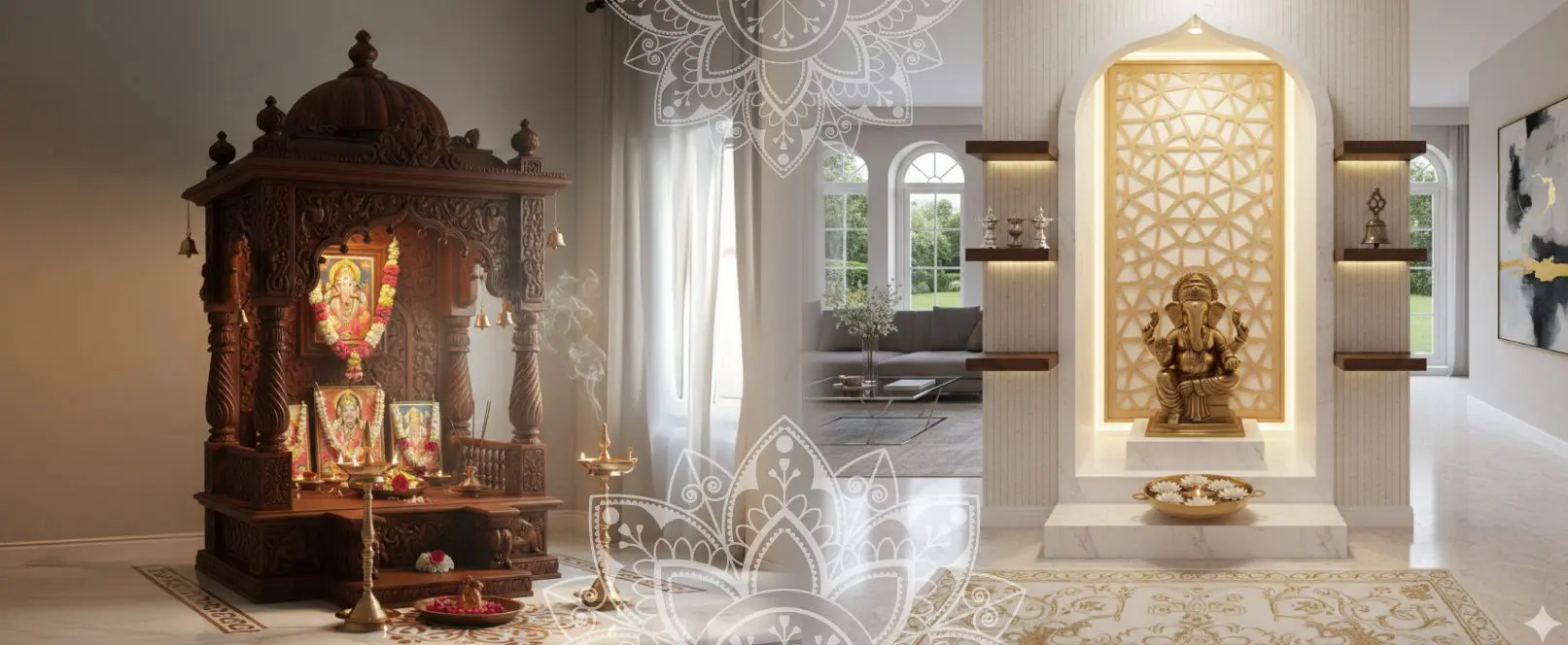
In Hindu homes, spiritual practices often revolve around a sacred space, but the terms “puja mandir” and “home temple” are sometimes used interchangeably, leading to confusion. Although closely related, these two concepts have distinct meanings and features. Understanding their differences can help you decide the right option to suit your lifestyle, home space, and devotional needs—especially for families living in the UK balancing tradition with modern living.
What is a Puja Mandir?
A puja mandir typically refers to the physical structure or piece of furniture—a wooden or marble shrine—dedicated to housing idols (vigrahams), religious artifacts, and puja essentials. It is often compact, crafted with intricate design elements like carvings or brass fittings, and serves as the focal point of worship in a home. A puja mandir can be a standalone altar on a table, a wall-mounted unit, or a larger cabinet-like structure.
Primarily, the puja mandir is a sacred installation designed to keep deities and puja items organized and elevated for daily rituals. Its size and style are usually tailored to the available space—from compact mandirs suitable for flats to grander units in larger homes.
What is a Home Temple?
A home temple, by contrast, is a broader concept that includes the entire dedicated sacred space or room in a house set aside for worship, meditation, and religious ceremonies. It encompasses not just the mandir but also the surrounding elements such as seating areas, storage for scriptures and ritual items, décor, lighting, and symbolic objects like bells or kuthu vilakku (traditional lamps).
A home temple may contain multiple mandirs or altars aligned with family traditions and festival needs. It acts as a personal sanctum where the family gathers for pujas, prayers, and spiritual reflection, often serving as a center for cultural and religious education.
Key Differences
- Scope: A puja mandir is the physical shrine or altar unit, whereas the home temple refers to the larger dedicated worship space or room.
- Size: Mandirs are generally smaller and can fit into a corner or shelf; home temples require a separate space or room with enough room for rituals and gatherings.
- Functionality: Mandirs store and display idols and puja items; home temples include additional facilities like storage, seating, shelves for holy books, and decorations.
- Usage: Mandirs support daily worship by providing a defined space for idols and ritual essentials; home temples facilitate elaborate ceremonies, festive gatherings, and meditation.
- Flexibility: A puja mandir can fit into apartments or small homes easily, ideal for busy UK lifestyles. A home temple requires more space, often suited to bigger houses or dedicated rooms.
What Suits You Best?
For most UK homes, especially flats and apartments where space is limited, a beautiful, compact puja mandir offers a practical and devotional solution. It provides a sacred focus for daily prayers with minimal space requirements and easy maintenance. Giri UK offers a variety of elegant wooden and tabletop mandirs that blend tradition with contemporary design ideals, perfect for diaspora homes.
If your home allows a dedicated room or spacious corner, a home temple enriches spiritual practice by accommodating larger rituals, multiple deities, and communal activities. It transforms your worship experience, creating a holistic environment that nurtures faith and family bonding.
Wrapping Up
Choosing between a puja mandir and a home temple depends on your available space, lifestyle, and devotion style. A mandir is an essential sacred furniture piece facilitating daily worship, while a home temple is an expanded spiritual sanctuary for comprehensive religious life. Both are vital in preserving Hindu traditions, and with thoughtful planning, either can beautifully fit into your UK home. Shop all your pooja essentials from GiriUK.
Comments